-1.png?w=1976&h=824)
Revolutionizing PCB Production: The Rise of 3D Printing in Electronics
In the ever-evolving world of electronics, the printed circuit board (PCB) remains a cornerstone of device functionality, connecting and supporting electronic components. As technology continues to advance, so do the methods of designing and manufacturing PCBs. One of the most exciting innovations in recent years is the use of 3D printing in PCB fabrication. This breakthrough has the potential to revolutionize the way we design, prototype, and produce circuit boards. In this blog, we’ll delve into what 3D printing of PCBs is, how it works, and why it's a game-changer for the electronics industry.
What is 3D Printing of PCBs?
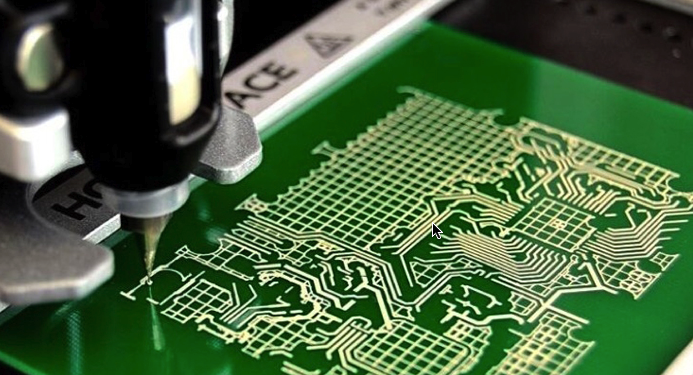
3D printing, also known as additive manufacturing, is a process where materials are deposited layer by layer to create a three-dimensional object based on a digital design. In the case of PCBs, 3D printing refers to the ability to directly print the components and circuits of a PCB onto a substrate without the need for traditional PCB fabrication processes, such as etching, drilling, and soldering.
Unlike conventional PCB manufacturing methods, which often rely on complex machinery and extensive human involvement, 3D printing simplifies the process by allowing the direct creation of intricate circuits on flexible or rigid substrates. This technology not only opens up new possibilities for design flexibility but also enables rapid prototyping and customization for specific applications.
How Does 3D Printing of PCBs Work?
The process of 3D printing PCBs involves several steps:
- Designing the PCB: The first step is to create a digital design of the PCB using Computer-Aided Design (CAD) software. This design includes all the necessary components, traces, and layouts for the circuit board.
- Selecting the Materials: Unlike traditional PCBs, which rely on copper and other rigid materials, 3D printing of PCBs can involve a variety of materials. Conductive inks or pastes (such as silver or copper) are used to print the electrical traces, while insulating materials like epoxy or polymers are used to create the substrate.
- Printing the PCB: The 3D printer, using the selected materials, begins to build the PCB layer by layer, starting with the conductive traces that form the circuit. The printer precisely applies the conductive material onto the substrate according to the digital design, creating the pathways that will connect the electrical components.
- Adding Components: In some 3D printing techniques, components such as resistors, capacitors, and microchips can be directly embedded into the PCB during the printing process. This is a major advantage, as it reduces assembly time and the need for additional soldering or component placement.
- Curing and Finalization: After the layers are printed, the PCB may need to be cured or treated to harden the materials and ensure the integrity of the board. The final result is a fully functional PCB, ready for use in electronics.
Advantages of 3D Printing PCBs
The rise of 3D printing technology offers several significant advantages over traditional PCB manufacturing methods. These benefits include:
- Faster Prototyping and Time-to-Market
One of the biggest advantages of 3D printing PCBs is the ability to quickly prototype designs. Traditional PCB manufacturing involves multiple steps, including fabrication, assembly, and testing, which can take several weeks. With 3D printing, prototypes can be created in a matter of hours, enabling faster iteration and reducing the time it takes to bring a product to market.
- Cost-Effective Low-Volume Production
For small-batch and low-volume production, 3D printing offers a more cost-effective alternative to traditional methods. Traditional PCB manufacturing often requires expensive setup costs, including etching, drilling, and component placement. However, with 3D printing, there are no such setup costs, which makes it ideal for startups, researchers, and hobbyists who need a small number of PCBs.
- Design Flexibility and Customization
3D printing allows for greater design flexibility, especially in terms of complex shapes and structures. Unlike traditional PCB manufacturing, which is limited to rigid, flat boards, 3D printing can create PCBs with customized shapes, flexible forms, and even multi-layered structures. This opens up new possibilities for integration into unconventional products, such as wearable devices, medical implants, and flexible electronics.
- Reduced Material Waste
Traditional PCB manufacturing methods involve subtracting material, such as etching away copper traces from a larger sheet of copper. This process generates significant material waste. In contrast, 3D printing is an additive process, where material is only deposited where needed, significantly reducing waste and making the manufacturing process more sustainable.
- Direct Component Integration
One of the most exciting possibilities with 3D printed PCBs is the ability to integrate electronic components directly into the PCB during the printing process. This eliminates the need for additional assembly steps, such as soldering or surface-mount technology, which can reduce production time and costs.
Applications of 3D Printed PCBs
3D printed PCBs are already making waves in several industries, and their potential applications are vast:
- Rapid Prototyping
For engineers and designers, rapid prototyping is a major advantage of 3D printed PCBs. Whether it’s testing new designs, troubleshooting, or evaluating new technologies, 3D printing allows for quick and efficient prototyping, enabling engineers to test their ideas without waiting for traditional manufacturing processes to complete.
- Wearable Electronics
Wearables such as smartwatches, fitness trackers, and health-monitoring devices require flexible, compact, and lightweight PCBs. 3D printing enables the creation of flexible, stretchable PCBs that can conform to the shape of the device, making it ideal for wearable applications where space and comfort are key.
- Internet of Things (IoT) Devices
IoT devices often require custom and compact PCBs that are easy to integrate into a wide range of devices. 3D printing allows for the creation of small, unique, and optimized PCBs, which can be integrated into various IoT products, from smart home devices to industrial sensors.
- Medical Devices
3D printed PCBs are also finding applications in the medical field, especially for wearable health devices or even implantable electronics. The ability to print flexible, custom PCBs that fit the shape of a patient’s body opens up new possibilities for advanced medical technologies.
- Educational and Hobbyist Projects
3D printing also provides a low-cost and accessible way for students, hobbyists, and DIY enthusiasts to experiment with PCB design and development. 3D printing allows for affordable experimentation without the need for expensive manufacturing tools, making it a valuable resource for learning and innovation.
Challenges and Limitations of 3D Printing PCBs
While 3D printing offers numerous advantages, it is not without its challenges:
- Material Limitations: The materials used in 3D printing, such as conductive inks and pastes, are not always as reliable or durable as the traditional materials used in conventional PCB manufacturing.
- Resolution and Precision: Although the resolution of 3D printers has significantly improved, achieving the same level of fine detail and accuracy as traditional methods can still be challenging, especially for high-frequency applications.
- Scalability: While 3D printing is great for prototyping and small runs, it may not yet be cost-effective or efficient for large-scale mass production of PCBs.
Conclusion
3D printing is undeniably transforming the PCB manufacturing landscape, offering faster prototyping, greater design flexibility, and reduced material waste. As technology advances, we can expect 3D printing to become an even more integral part of the PCB industry, enabling the development of highly customized, compact, and efficient circuit boards for a wide range of applications.
While there are still some challenges to overcome, such as material performance and scalability, the future of 3D printed PCBs looks promising. Whether it’s for rapid prototyping, wearable electronics, or IoT devices, 3D printing has the potential to drive innovation and push the boundaries of what’s possible in PCB design and production. As this technology continues to evolve, the possibilities for PCB manufacturing are virtually limitless.
https://www.eetimes.com/when-3d-printing-meets-pcbs/
https://news.nus.edu.sg/nus-researchers-develop-technique-to-fabricate-three-dimensional-circuits/
https://smttoday.com/2025/04/03/future-of-smts-and-pcbs-is-additive-sustainable-3d/