-1.png?w=1976&h=824)
What Are Rigid-Flex Printed Circuit Boards (PCBs)? A Complete Guide.
In today's fast-evolving electronics industry, devices are getting smaller, smarter, and more durable. Traditional rigid PCBs (Printed Circuit Boards) often can't meet these demands on their own. That’s where rigid-flex PCBs come in—an innovative hybrid that blends the best of rigid and flexible board technologies.
In this blog, we’ll explore what rigid-flex PCBs are, how they work, and why they’re transforming the design of modern electronics.
What Is a Rigid-Flex PCB?
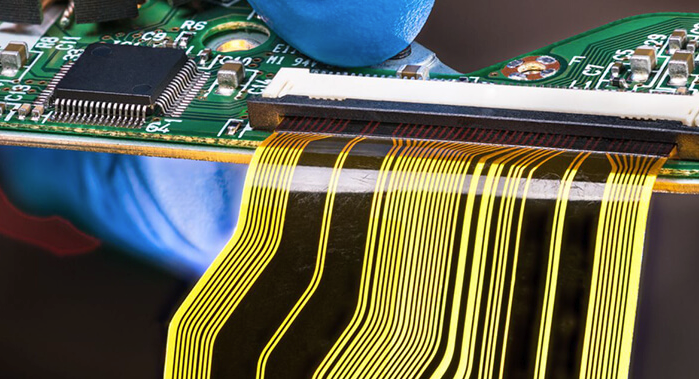
A rigid-flex PCB is a type of circuit board that combines rigid and flexible substrates into a single, unified structure. Unlike traditional PCBs, which are either completely rigid or entirely flexible, rigid-flex boards are engineered to offer both structural support and bendability.
Typically, a rigid-flex board consists of multiple layers of flexible circuits attached to or sandwiched between rigid boards. These layers are interconnected through plated through-holes, allowing seamless signal transmission across the entire structure.
Key Features
- Hybrid construction: Integrates flexible and rigid sections.
- 3D capability: Can be folded or twisted to fit complex enclosures.
- Weight reduction: Eliminates bulky connectors and cables.
- Reliability: Fewer interconnects mean fewer points of failure.
Common Applications
Rigid-flex PCBs are widely used in applications where space, weight, and reliability are critical:
- Medical devices (e.g., pacemakers, diagnostic tools)
- Consumer electronics (e.g., smartphones, cameras, wearables)
- Aerospace and defense (e.g., satellites, guidance systems)
- Automotive electronics (e.g., infotainment systems, airbag controls)
- Industrial machinery (e.g., sensors, robotics)
How Rigid-Flex PCBs Are Made?
The manufacturing process involves several stages:
- Design Layout: CAD software is used to plan both rigid and flexible regions.
- Material Selection: Polyimide is often used for the flex layers, while FR-4 is standard for the rigid parts.
- Layer Lamination: Flexible and rigid layers are laminated together in precise sequences.
- Drilling and Plating: Through-holes and vias are drilled and electroplated to establish electrical connections.
- Etching and Imaging: Copper is etched to form circuit traces.
- Testing: Electrical and mechanical tests ensure functionality and durability.
Advantages of Rigid-Flex PCBs
- Space Saving: Ideal for compact devices with unusual form factors.
- Enhanced Reliability: Fewer connectors = less risk of connection failure.
- Better Signal Integrity: Shorter trace lengths reduce EMI and signal loss.
- Mechanical Strength: Flex areas handle vibration and movement better.
- Simplified Assembly: Reduced need for cables and connectors lowers assembly complexity and cost.
Challenges to Consider:
- Higher initial cost: More expensive to design and fabricate than standard PCBs.
- Complex manufacturing: Requires experienced fabricators and precise processes.
- Design considerations: Must account for bend radius, layer alignment, and thermal expansion.
Tips for Designing Rigid-Flex PCBs
- Minimize bending stress by placing bends in flexible regions, not near vias or components.
- Use curved traces in flex areas to avoid cracking.
- Keep flex layers symmetrical to prevent warping.
- Avoid placing components near transition zones between rigid and flexible regions.
- Work closely with manufacturers during the design stage to optimize for yield and performance.
Final Thoughts
Rigid-flex PCBs represent the future of electronic design in space-constrained, performance-critical applications. Their ability to integrate functionality, reduce weight, and improve reliability makes them the go-to solution for next-generation devices.
Whether you're developing a wearable fitness tracker, a surgical instrument, or an aerospace controller, rigid-flex technology could be the key to pushing your design further—both literally and figuratively.
Related Links:
https://www.pcbway.com/fpc-rigid-flex-pcb/rigid-flex-pcb.html
https://www.electronicsweekly.com/news/rigid-flex-pcbs-hold-key-medical-wearables-2016-12/